MDF vs. Plywood vs. Particle Board: Which Material is Best for Your Project?
When tackling a woodworking, construction, or DIY project, the materials you choose will impact not only the outcome but also the longevity, durability, and appearance of your work. Among engineered wood products, MDF (Medium-Density Fiberboard), plywood, and particle board are three of the most popular choices. But which one is best for your project?
In this guide from Gui’s Lumber, we’ll break down the pros and cons of each material, explain where each is commonly used, and help you make the most informed decision for your next project.
Why Material Selection Matters in DIY and Construction Projects
Material selection isn’t just a budgetary decision — it’s about structural integrity, appearance, and functionality. The right material can mean the difference between a professional-looking finish and a project that warps, chips, or breaks down over time.
Factors to consider include:
- Load-bearing strength
- Moisture resistance
- Workability and ease of cutting
- Finishing options (painting, staining)
- Longevity
- Cost
Each wood product — MDF, plywood, and particle board — has unique strengths and drawbacks that make them suitable for different kinds of projects. Understanding these differences is key to a successful outcome.
What Is MDF (Medium-Density Fiberboard)?
MDF is made by breaking down hardwood or softwood residuals into fine wood fibers and combining them with wax and resin binders under high temperature and pressure. The result is a dense, smooth, and uniform sheet that’s ideal for projects requiring a clean finish.
Advantages of MDF:
- Smooth surface: Perfect for painting or applying veneer.
- No wood grain: Ideal for intricate cuts and consistent finishes.
- Affordable: Generally less expensive than plywood.
- Easy to cut: Cuts cleanly without splinters.
Disadvantages of MDF:
- Heavy: Denser than plywood, making it harder to transport and install.
- Weak in moisture: Swells easily if not sealed properly.
- Lower strength: Not ideal for load-bearing applications.
- Can produce fine dust when cut: Requires proper safety gear during cutting.
Common Uses:
- Cabinet doors
- Furniture pieces
- Wall paneling
- Decorative molding
What Is Plywood?
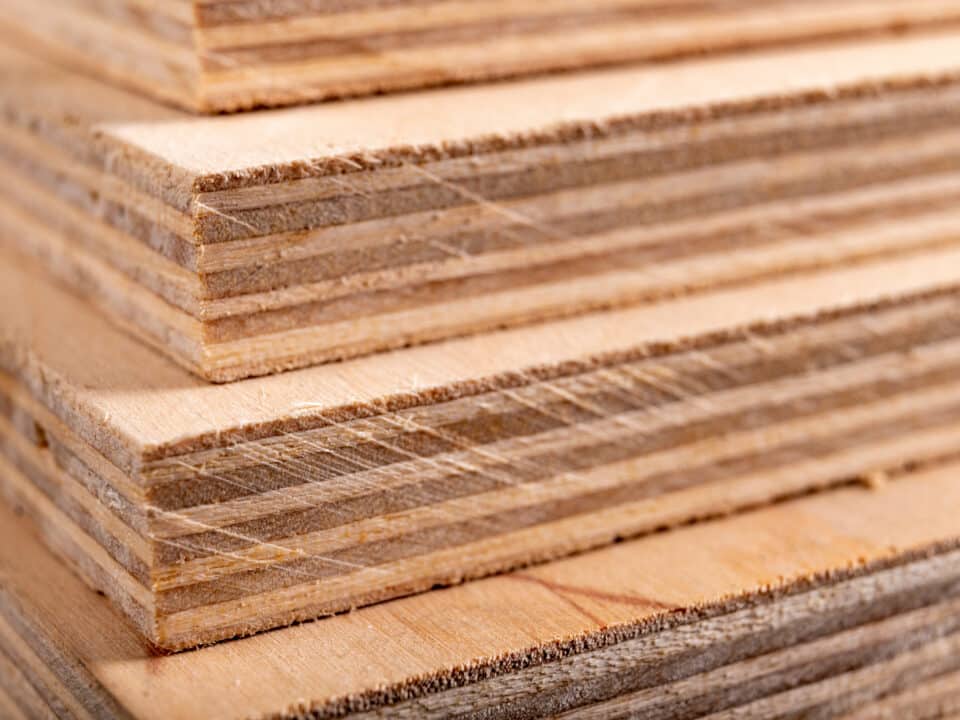
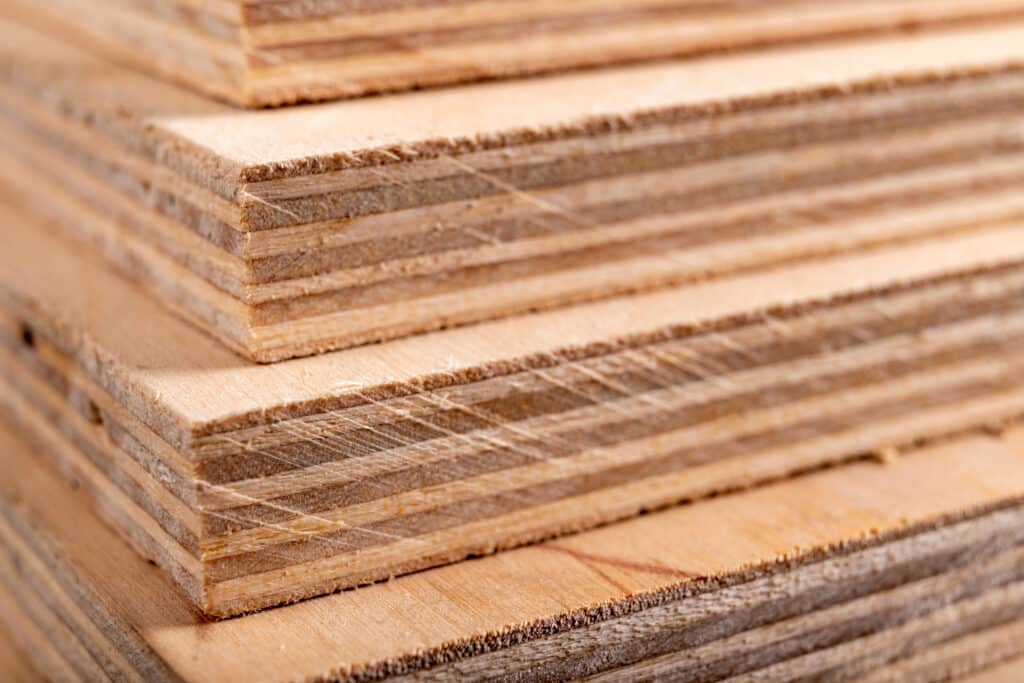
Plywood is made by gluing together thin layers (plies) of wood veneer, with the grain of each layer rotated up to 90 degrees to the adjacent layer. This cross-graining technique adds strength and stability, making plywood one of the strongest engineered wood products.
Advantages of Plywood:
- Strong and durable: Can support more weight than MDF or particle board.
- Moisture-resistant: Especially exterior or marine-grade plywood.
- Variety of grades: From construction-grade to cabinet-grade.
- Lightweight compared to MDF: Easier to handle and install.
Disadvantages of Plywood:
- Cost: Higher than MDF or particle board.
- Surface may have defects: Requires higher grades for a smooth finish.
- Splinters during cutting: Needs careful edge finishing.
Common Uses:
- Flooring sublayers
- Wall sheathing
- Cabinet boxes
- Roofing and framing
- Furniture
What Is Particle Board?
Particle board is made from wood chips, sawmill shavings, or sawdust that is bound together with resin and compressed into sheets. It’s the most economical option among engineered wood products but also the least durable.
Advantages of Particle Board:
- Lowest cost: Ideal for budget-conscious projects.
- Smooth surface: Good for laminating and veneering.
- Lightweight: Easier to move and install.
Disadvantages of Particle Board:
- Not water-resistant: Swells and deteriorates quickly when exposed to moisture.
- Brittle: Prone to cracking and breaking under stress.
- Poor screw-holding capacity: Hardware can loosen over time.
- Shorter lifespan: Not ideal for long-term use or heavy-duty applications.
Common Uses:
- Inexpensive furniture
- Shelving
- Temporary structures
- Interior door cores
Side-by-Side Comparison: MDF vs. Plywood vs. Particle Board
| Feature | MDF | Plywood | Particle Board |
| Strength | Medium | High | Low |
| Cost | Moderate | High | Low |
| Moisture Resistance | Low | High (depending on grade) | Very Low |
| Weight | Heavy | Lighter than MDF | Light |
| Workability | Easy to cut, no splinters | Requires sharp tools | Easy, but fragile |
| Finish Surface | Very smooth, paint-friendly | Grain may show, good for veneer | Smooth, suitable for laminate |
| Durability | Moderate | High | Low |
| Best For | Paintable furniture, molding | Structural work, cabinets | Budget furniture, temporary use |
Choosing the Right Material for Your Specific Project
Choosing between MDF, plywood, and particle board depends heavily on the specific needs of your project. Here’s how to decide:
Use MDF if:
- You want a smooth, painted finish.
- You’re creating decorative elements like molding, trim, or wall panels.
- The project is indoors and not exposed to moisture.
- You need precision cuts and detail work.
Use Plywood if:
- You need strength and load-bearing capacity.
- The project will be exposed to moisture (especially with marine or exterior-grade plywood).
- You’re building cabinet boxes, furniture frames, or subfloors.
- You plan to stain the wood and want natural grain to show.
Use Particle Board if:
- Budget is the main concern.
- You’re building laminated furniture (like desks or bookshelves).
- The structure will remain indoors in a dry area.
- The project is short-term or light-use.
It’s also worth noting that combining these materials is common — for example, using plywood for the cabinet box and MDF for the doors for a mix of strength and finish quality.
Visit Gui’s Lumber for Expert Help, Quality Materials, and Custom Cuts
At Gui’s Lumber, we’re more than just a building supply store — we’re your partner in project success. Whether you’re working on a DIY home improvement task or a full-scale construction job, we offer:
- High-quality MDF, plywood, and particle board in a variety of thicknesses and grades
- Custom cuts to fit your exact dimensions
- Expert advice to help you choose the right material
- Fast, reliable service to keep your project on schedule
Our knowledgeable staff is here to guide you through the pros and cons of each option, based on your budget, application, and design preferences.
Stop by one of our convenient locations or contact us today to learn more about how we can help bring your vision to life.